This recommendation is currently available in English.
About the book
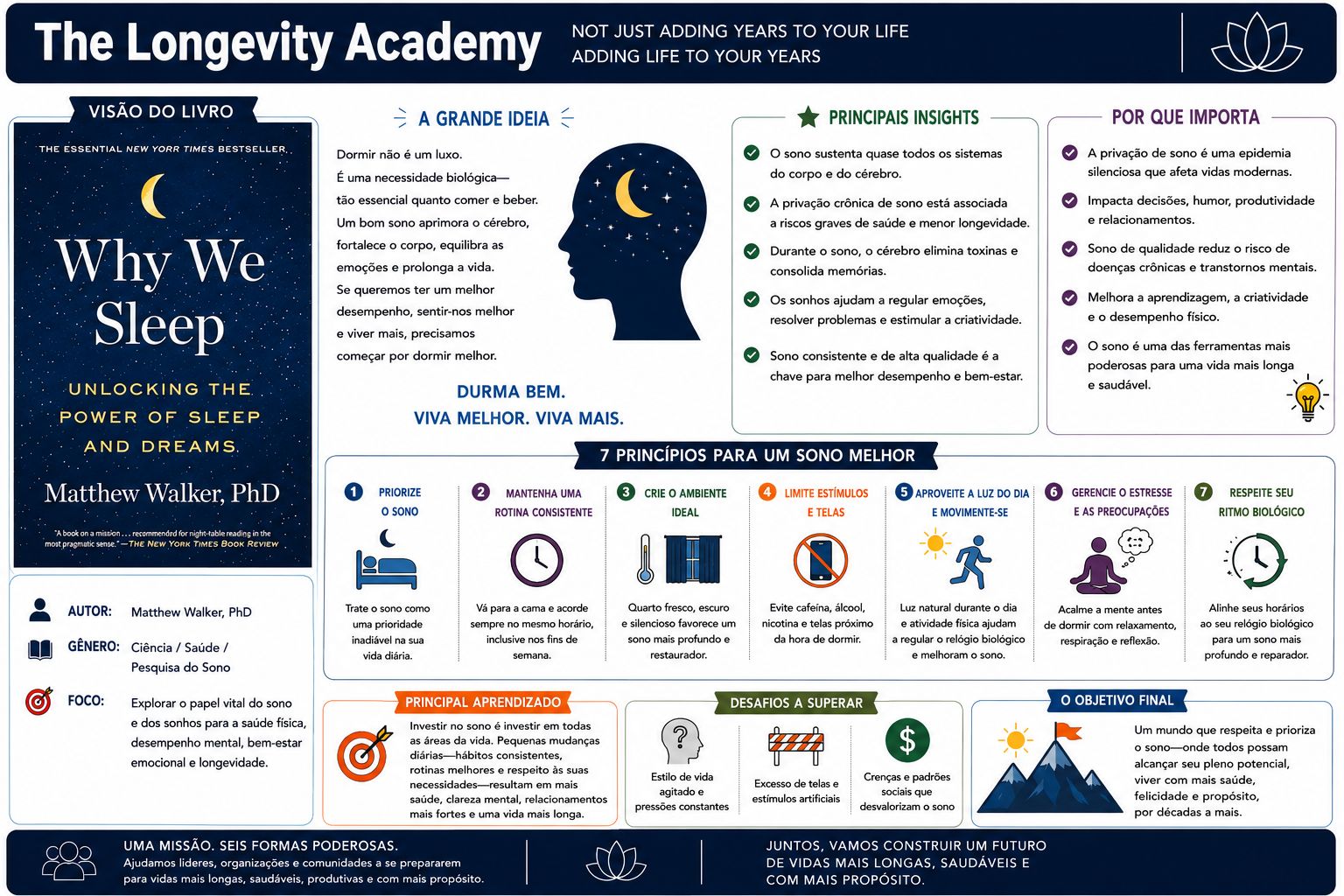
Matthew Walker explores sleep as a biological foundation for learning, memory, physical health, emotional balance and long-term well-being.
Sleep is not a luxury or time lost; it is an active process that supports nearly every system in the body and brain.
The big idea
Consistent, high-quality sleep helps the brain consolidate memories, regulate emotion and restore the body, making it a central pillar of healthspan.
- Prioritize
- Make room for sleep
- Regularity
- Keep a steady rhythm
- Environment
- Prepare the room
Four foundations for restorative sleep
Prioritize
Make room for sleep
Treat a sufficient sleep opportunity as a non-negotiable part of the daily schedule.
Sleep deserves protected time.Regularity
Keep a steady rhythm
Aim for consistent bed and wake times, including on weekends whenever practical.
Consistency supports the body clock.Environment
Prepare the room
Create a cool, dark and quiet environment and reduce stimulating screens near bedtime.
The setting can invite rest.Daylight
Align body and day
Use morning light, daytime movement and an evening wind-down routine to reinforce natural rhythms.
Daytime habits shape nighttime sleep.Key takeaway
Small, repeatable changes to schedule, light, movement and environment can make sleep more consistent and restorative.
Why it matters
Chronic sleep loss can affect attention, mood, performance and physical health, while good sleep supports resilience and recovery.
The result
More energy, clearer thinking, stronger recovery and a healthier foundation for a longer life.
Original slides
Download the original material supplied by the client.
The original English slide was not supplied.